What Chefs Know About Coffee That the Rest of Us Don’t
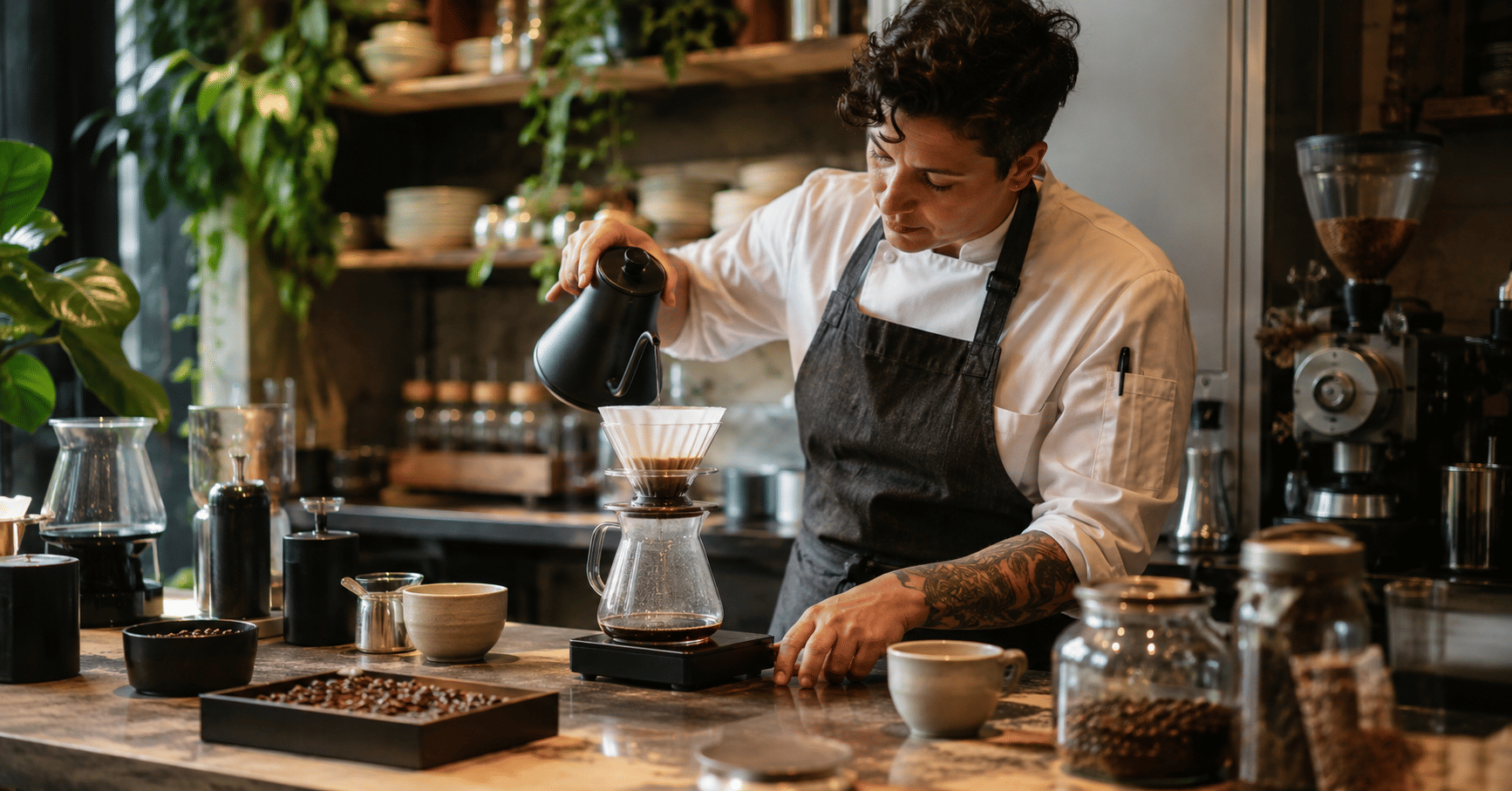
The Kitchen as a Coffee Classroom
Professional kitchens are not typically thought of as coffee laboratories, but they have long been one of the most rigorous training grounds for sensory development. Chefs spend years calibrating their palates — learning to identify acidity, bitterness, texture, and the way heat transforms raw ingredients into something entirely different. These skills transfer directly to coffee, even though the two worlds rarely get credited for their overlap.
When someone with a culinary background approaches coffee, they are not starting from scratch. They bring a working vocabulary of flavor that most hobbyist coffee drinkers spend years building. They understand Maillard reactions — the same chemical process behind a seared crust on a steak is at work when coffee beans are roasted. They know how small adjustments in time and temperature produce dramatically different results.
How Culinary Training Shapes Sourcing
One of the sharpest distinctions between a chef-informed approach to coffee and a purely commercial one is in sourcing. Chefs who have spent time working internationally tend to have firsthand relationships with producers. They have visited farms, eaten at local tables, and come to understand that flavor starts in the ground long before it reaches a roaster or a barista.
This is where a coffee origin story, shaped by culinary travel, carries real weight. When someone has walked coffee farms, the decision about which beans to buy becomes less about price points and more about the relationship between terroir, farming practices, and the flavor profile that ends up in the cup. It is the same instinct a chef applies when selecting heirloom tomatoes or single-origin olive oil — quality is traceable, and that traceability matters.
Precision as a Practice
Culinary training also instills a respect for process discipline that is not always present in commercial coffee production. In a professional kitchen, timing is non-negotiable. A sauce reduced thirty seconds too long changes the dish. The same logic applies to roasting. Even small deviations in roast curves can flatten a bean’s complexity or strip away the brightness that made it worth selecting in the first place.
Brewing itself is treated differently when approached through a culinary lens. Water temperature, grind size, brew ratio, and extraction time are not guidelines — they are variables that interact in ways that produce measurable outcomes in the cup. This is how restaurants that take coffee seriously approach service: every cup is a controlled outcome, not an approximation.
The Third Place, Designed with Intention
Chefs also think differently about the dining environment, and this sensibility shows up when they design coffee spaces. The concept of a “third place” — a location that is neither home nor workplace, but somewhere in between — has been studied in sociology and urban design for decades. Ray Oldenburg, who coined the term in his 1989 book The Great Good Place, argued that third places are essential for building community and providing informal social infrastructure.
When a culinary professional designs a café space, they tend to think about it the way they think about a restaurant floor: flow, sound, smell, seating distance, and the way all of these elements shape whether a person feels comfortable staying. Coffee, in this context, is not just the product. It is the anchor of an experience.
Why This Matters Beyond the Cup
The crossover between culinary expertise and coffee craft is more than an interesting footnote. It points to a broader principle: that depth of knowledge in one discipline produces better outcomes in adjacent ones. The habits that make a skilled chef — curiosity about ingredients, respect for process, attentiveness to the person being served — are the same habits that produce coffee worth seeking out.
For consumers who care about what they drink and where it comes from, understanding this connection changes the way they read a roaster’s story. It shifts the question from “is this coffee good?” to “how did the people who made this develop their sense of what good means?”
That is a more interesting question. And the answer, more often than not, starts in a kitchen.