Unlock Precision: 2026’s Smart Pressure Calibration Shift
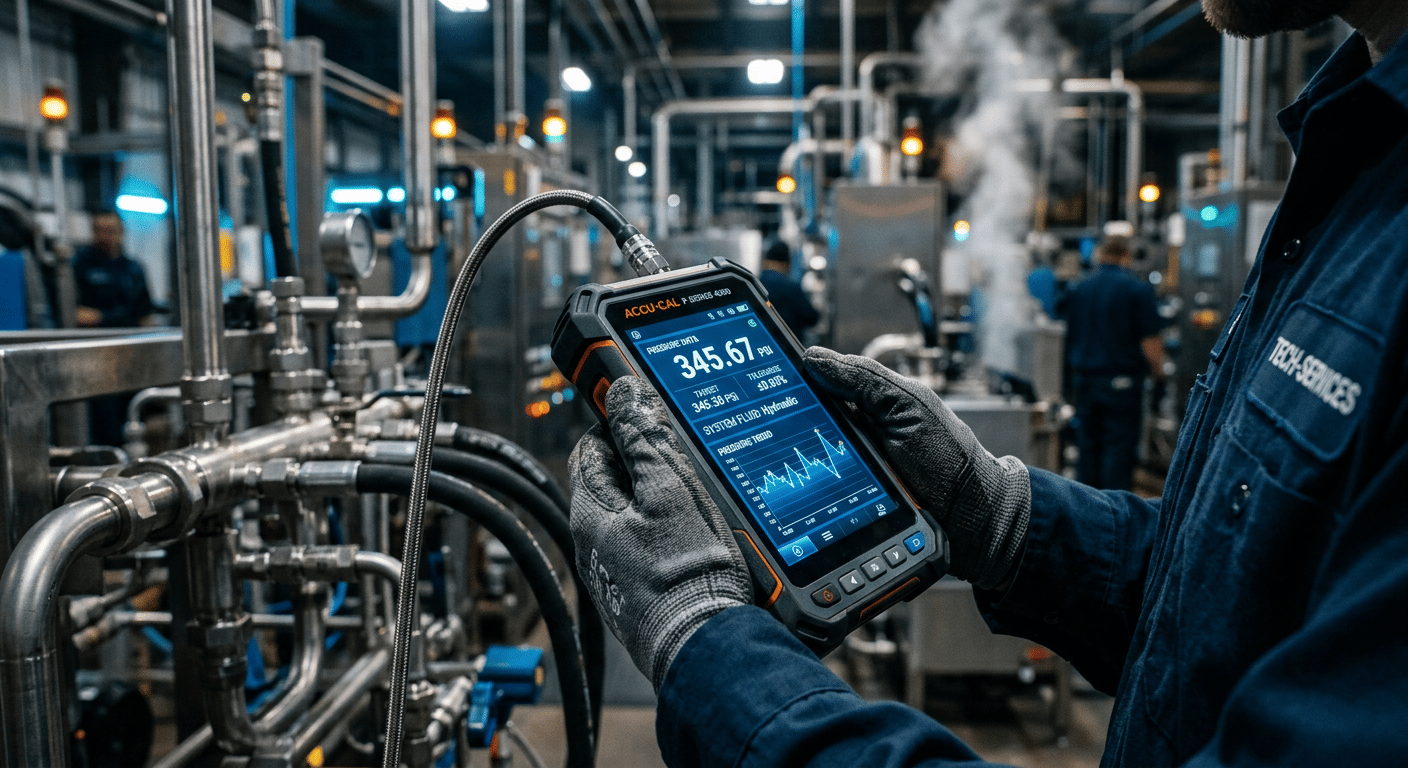
In 2026, industries across the US face mounting pressure—literally—to integrate smarter calibration tools amid Industry 4.0 demands. Technicians and engineers now prioritize devices that automate checks, cut downtime, and ensure compliance without constant manual tweaks.
Why Calibration Drives Industrial Reliability
Accurate pressure readings prevent failures in pipelines, reactors, and compressors, where even minor drifts can trigger shutdowns or safety risks. US manufacturing and energy sectors lose billions of dollars annually to faulty measurements, pushing teams toward tools that verify gauges on-site with minimal hassle. Federal standards from NIST reinforce this, mandating traceable calibrations up to 280 MPa for everything from aerospace parts to pharma processes.
Regular checks maintain process efficiency and spot issues before they escalate. In oil and gas, for instance, precise verification at compressor stations keeps gas flowing smoothly over hundreds of miles.
Rise of Smart, Portable Innovations
Modern pressure calibrators now feature digital interfaces and self-adjusting algorithms that adapt to environmental shifts, such as temperature fluctuations, in real time. These handheld units generate stable pressures up to thousands of psi, isolating tests from background noise for readings as fine as 0.0002 inches water column. Machine learning outperforms older analog methods by predicting drift, slashing manual errors by up to 30% in high-stakes settings.
Portability shines in fieldwork; technicians carry units weighing under 5 pounds to remote sites, logging data via wireless links for instant audits. This setup aligns with ISO 17025 updates, where 70% of labs now adopt digital protocols for global consistency.
Key Applications in US Heavy Industries
Oil and gas operators rely on these tools to measure differential pressure across filters and flow meters, ensuring custody transfer accuracy and avoiding regulatory fines. In automotive testing, they validate manifold sensors for fuel efficiency, while pharma lines use them to sterilize without risk of contamination.
Manufacturing floors benefit too, calibrating hydraulic systems to sustain output amid supply chain strains. Aerospace demands ultra-traceable checks, where piston-gauge standards hit uncertainties below 10 ppm.
Navigating 2026 Market Momentum
The calibration services sector hits USD 7.8 billion this year, growing at 7.8% CAGR through 2030, fueled by automation and stricter regs. Digital models lead, with IoT integration allowing remote monitoring—vital as US factories digitize under Industry 4.0. Demand surges in the Midwest and Gulf Coast, where energy firms expand LNG ops.
Yet challenges persist: labs grapple with zero-drift in high-precision gear, requiring annual NIST-style repeats. Forward-thinking teams invest in hybrid units blending hydraulic and pneumatic capabilities for versatile coverage.
Selecting Tools for Peak Performance
Look for modules that support gauge, absolute, and differential modes, with built-in pumps for quick setup. Battery life exceeding 8 hours and rugged casings (IP67-rated) handle harsh US plant conditions. Software compatibility for cloud reporting streamlines ISO audits, turning raw data into compliance proof.
Prioritize uncertainty ratings under 50 ppm for critical apps; pair with temperature probes for holistic checks. Training focuses on programmed sequences, reducing setup time by half.
Future-Proofing with Automation Trends
By late 2026, expect AI-driven predictors to dominate, flagging anomalies before they hit production. Edge computing in calibrators will enable autonomous adjustments, mirroring the approach in smart factories, where sensors self-verify. US policymakers are eyeing subsidies for these upgrades, tying them to sustainability goals such as efficient energy use.
This evolution not only safeguards operations but also elevates technician roles from reactive fixes to proactive strategy. Facilities adopting early gain a competitive edge in precision-driven markets.