Trades Are Having a Moment — Are You Paying Attention?
The Quiet Resurgence Nobody Saw Coming
Something shifted in how people think about work. Not gradually — more like a snap. The image of a four-year degree as the only credible path to a stable career has been losing its grip for years, and what’s filling the gap is something far more tangible: skilled trades.
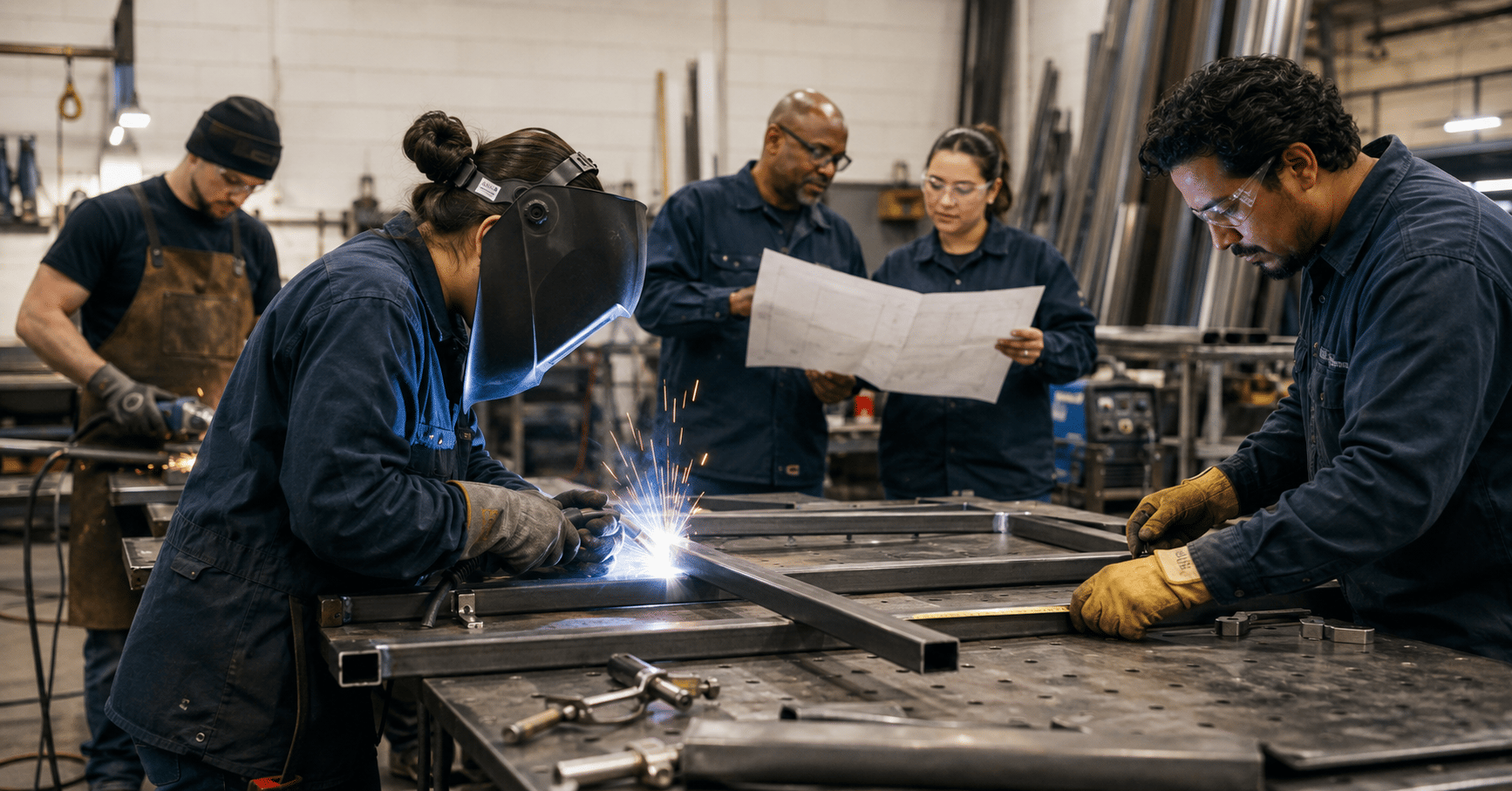
Metal fabrication, in particular, sits at an interesting intersection. It’s part engineering, part craft, part problem-solving under pressure. The people who do it well aren’t just following instructions — they’re reading materials, interpreting tolerances, making judgment calls with their hands that no algorithm can replicate.
That’s not a small thing. That’s leverage.
Why Fabricators Are Becoming Harder to Find
Manufacturing in the U.S. has been rebounding for over a decade, driven by reshoring, infrastructure spending, and the expansion of aerospace, defense, and clean energy sectors. All of that requires metal — shaped, cut, bent, welded, and assembled by people who know what they’re doing.
The problem is that the pipeline of trained fabricators hasn’t kept pace. Retirements are outpacing new entries into the field. Companies that once trained workers internally have scaled back those programs. The gap is real, and it’s creating upward pressure on wages and demand for anyone with verified, hands-on skills.
This isn’t a story about automation stealing jobs. Robotic welding systems still require human setup, programming, quality control, and repair. The floor-level fabricator hasn’t been replaced — the role has evolved and, in many respects, increased in value.
What It Actually Takes to Get Good at This
Metalworking has a learning curve that rewards repetition over theory. You can study blueprints, understand material properties, and memorize weld positions — but the moment you strike an arc or feed wire through a MIG gun, the knowledge gap between knowing and doing becomes obvious fast.
This is why hands-on training programs matter more than the credential alone. The best environments for learning fabrication are those built around shop time — where students work on real projects from week one, not spending months in a classroom before touching equipment.
Programs like the fab school metal fabrication courses are designed around exactly this premise: accelerated, project-based learning where students build things that stress-test everything they’ve covered. The result isn’t just technical competency — it’s the kind of confidence that translates directly to the shop floor.
The Career Landscape Is More Diverse Than It Looks
One reason skilled trades get undersold is a narrow perception of where fabricators end up. Welding in a structural steel yard is one path. But graduates of fabrication programs also move into motorsports, aerospace, custom automotive builds, film production, sculpture, architecture, and prototyping for product startups.
The underlying skill set — reading technical drawings, working to tight tolerances, understanding metals and how they behave under heat and stress — transfers across industries in ways that aren’t obvious from the outside. A fabricator who works on off-road race chassis for one year can shift to aerospace subassemblies the next, given the right certifications.
That kind of portability is worth thinking about when weighing career options. Specialized skills tied to physical, irreplaceable processes have a different kind of job security than roles that can be restructured, offshored, or automated overnight.
What the Smart Career-Changers Already Know
Career changers are increasingly making up a significant portion of vocational program enrollment. Former office workers, retail managers, and even engineers who want to work with their hands are discovering that fabrication training is one of the fastest ways to enter a high-demand field with a clear compensation structure.
The timeline is short. A focused certificate program can be completed in months, not years. The upfront cost is lower than most degree programs. And the job placement rates in fabrication — at schools with strong industry relationships — tend to run well above average.
None of that means it’s easy. The work is physically demanding and detail-oriented, and it requires genuine investment in becoming good at something that takes practice to master. But for people who want to build things that last, that’s not a deterrent. It’s exactly the point.
The Bigger Picture
There’s a broader cultural reframing of what “skilled” means. For a long time, the knowledge economy held the attention. Now, with infrastructure projects underway, manufacturing returning to domestic soil, and supply chains under pressure to localize, the people who can make things with metal are once again essential in a way that’s hard to overstate.
Getting in now — while the demand is high and the supply of trained workers is tight — isn’t just practical. For the right person, it’s a genuinely good bet.