The Real Cost of Equipment Downtime
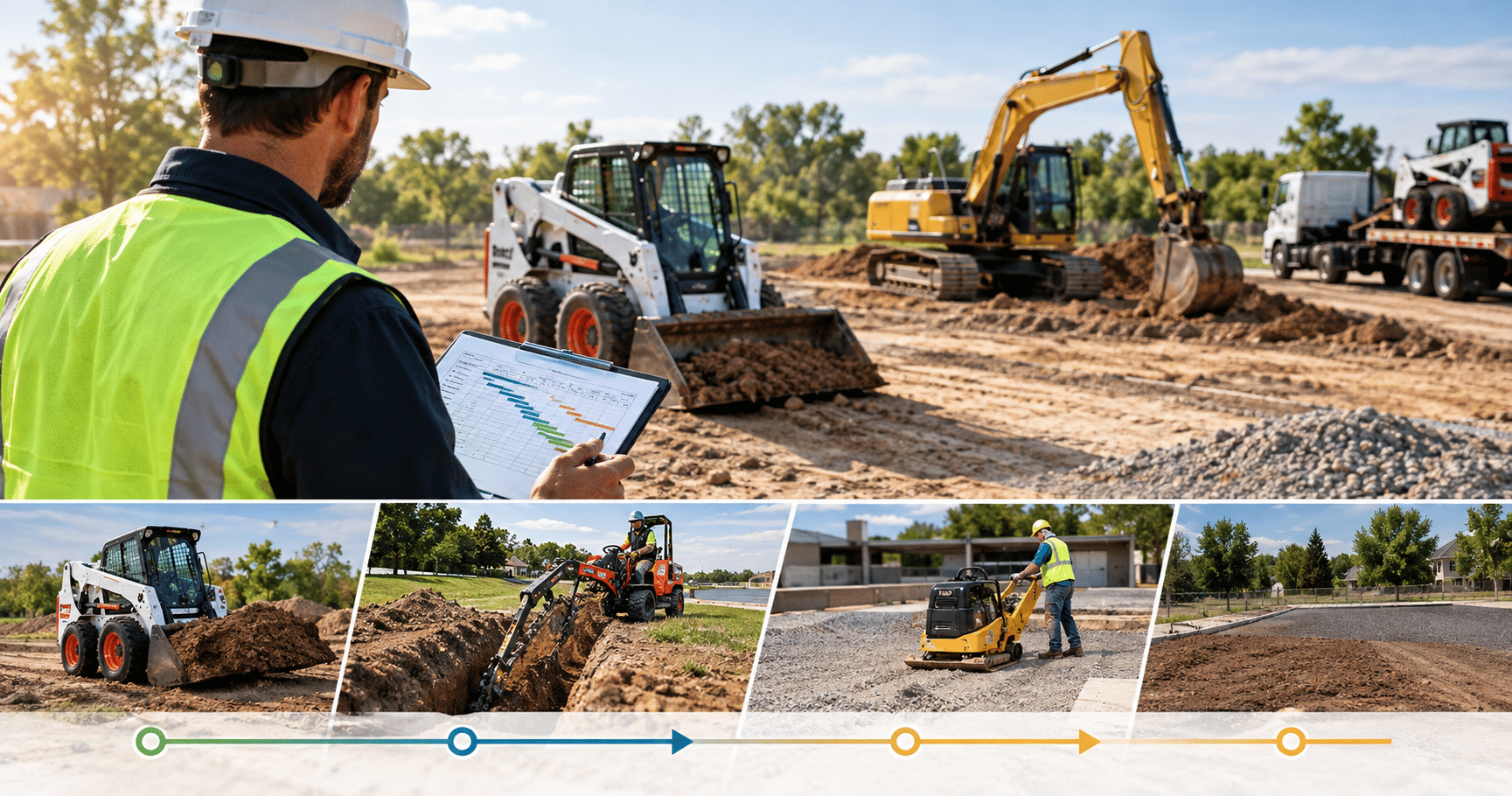
Every construction or landscaping project runs on two clocks: the labor schedule and the equipment schedule. Crews can often adjust their hours, but heavy machinery cannot simply show up whenever it’s convenient. When a compact loader, skid steer, or excavator arrives late, the entire job sequence shifts, and that shift rarely stays contained to a single day.
Why Equipment Timing Drives the Budget
Small and mid-sized contractors frequently underestimate how much a project’s profitability depends on machine availability rather than crew size. A landscaping team can be fully staffed and ready to grade a site, but if the loader needed to move soil hasn’t arrived, labor hours are spent waiting instead of working. That gap doesn’t just cost lost hours; it pushes every subsequent phase, from drainage installation to final grading, later into the week. On projects with tight weather windows, a single day’s delay can mean losing an entire work window until conditions improve again.
This is why experienced project managers treat equipment scheduling as a planning discipline, not an afterthought. They map out which machine is needed for which phase, confirm availability well before the crew arrives on site, and build in contingency time for adjustments. The goal isn’t just having the right machine, but having it at the right moment in the sequence.
Coordinating Delivery With Project Phases
Timing becomes especially important on multi-phase jobs, where one piece of equipment finishes its task just as another needs to begin. A trencher might be required for utility work in the morning, followed by a compactor in the afternoon to prepare the base for paving. If crews don’t plan these transitions with enough lead time, they end up idle between tasks or, worse, rush a phase to accommodate a machine scheduled to leave.
Reliable Bobcat rental and delivery services help address this by aligning drop-off and pickup windows directly with a project’s phase changes rather than a generic daily schedule. This reduces friction between tasks and keeps machinery moving through the site only when it’s needed, rather than sitting idle and taking up space on a constrained job site.
Building Buffer Into the Schedule
Even with careful planning, delays happen. Weather, site access issues, or unexpected ground conditions can all push a timeline. Experienced teams build a buffer of a day or two into their equipment plans, especially for weather-dependent phases or those that rely on a sequence of specialized machines. This buffer isn’t wasted time; it’s insurance against the compounding effect that a single delay can have on the rest of the schedule.
Treating Scheduling as a Core Skill
Equipment timing is rarely the most visible part of a project, but it often determines whether a job finishes on budget and on time. Contractors who treat scheduling with the same seriousness as labor planning tend to see fewer stalled days and smoother transitions between phases, which ultimately protects both the timeline and the bottom line.